


A Victorian Maritime Album
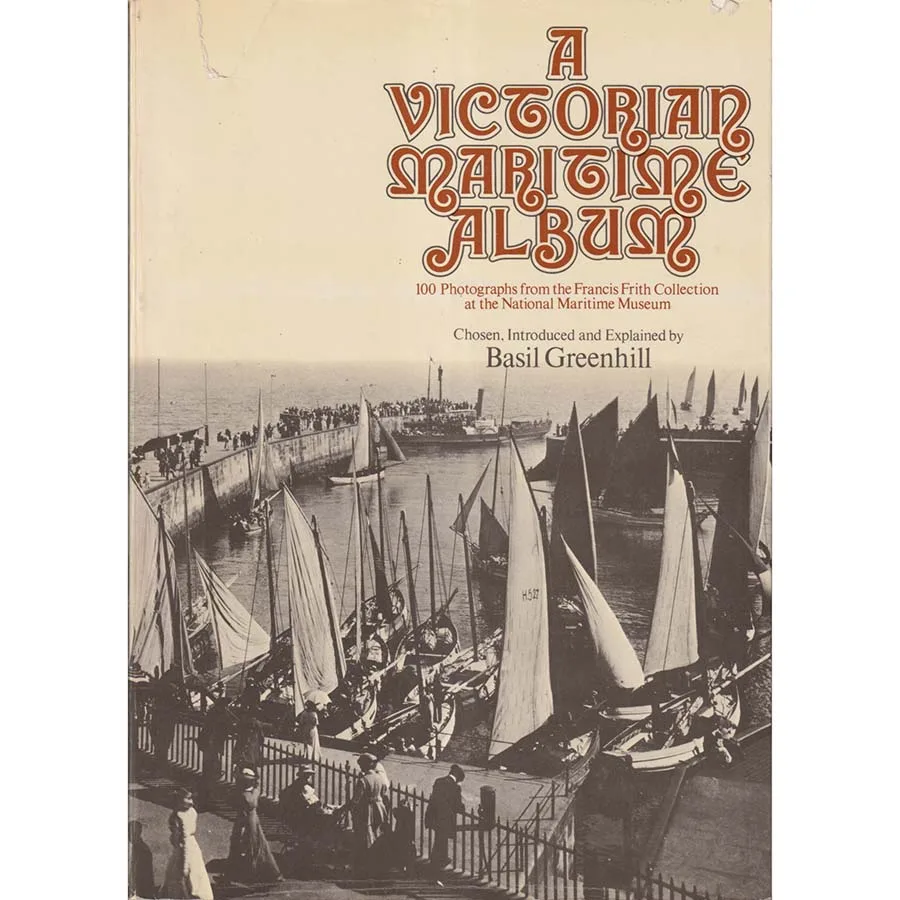
Publisher: Patrick Stephens Limited
Format: Paperback
ISBN: 0850592399
A Victorian Maritime Album by Basil Greenhill, published by Patrick Stephens Limited in 1977, is a gloriously visual excursion into the world of Victorian ships, harbours, sailors and maritime machinery, from an age when Britain had an empire, the seas were crowded with sail and steam, and absolutely everything seemed to involve either coal, rope or a man with formidable side-whiskers.
Basil Greenhill was one of Britain’s best-known maritime historians, and this book does exactly what the title promises: it presents the Victorian maritime world through a rich collection of images, illustrations and historical material, backed by commentary from someone who actually knew what all the complicated bits of a ship were called.
The nineteenth century was an extraordinary period at sea. Sail did not simply disappear when steam arrived; instead the two overlapped for decades, producing an era of magnificent sailing ships, early steamers, naval experimentation, commercial expansion and some wonderfully impractical transitional vessels that seem to have been designed on the principle that if one propulsion system was good, several must be better.
This is also the age of docks, shipyards, packet boats, ocean liners, fishing fleets, naval power and rapidly expanding global trade. Britain’s maritime infrastructure was enormous, noisy and absolutely essential to the economy, although probably less enjoyable if your particular role involved shovelling coal into a furnace in the middle of the Atlantic.
The album format makes this especially appealing. Rather than presenting maritime history as an uninterrupted wall of text, Greenhill allows the photographs and illustrations to do much of the work. Ships, crews, ports and working scenes give the reader a direct visual connection with a world that otherwise risks becoming a collection of dates and tonnages.
And what a photogenic world it was. Great sailing ships under towering rigs, paddle steamers belching smoke, crowded quaysides, naval vessels sitting magnificently at anchor and sailors posing with the expression of men who have just been told to remain perfectly still for far longer than they consider reasonable.
The book also captures the astonishing scale of technological change during the Victorian period. Ships became larger, faster and more specialised. Iron replaced wood, steam increasingly challenged sail, and naval architecture advanced at a pace that would have seemed almost absurd only a generation earlier.
Naturally, the Victorians responded to all this progress by building machines of terrifying complexity and then expecting people to operate them with gauges, levers and experience rather than computer diagnostics.
For modern readers, A Victorian Maritime Album is particularly enjoyable because it combines technical history with social history. The ships matter, but so do the people who built them, sailed them, loaded them, repaired them and occasionally discovered that the sea was not remotely interested in the latest engineering improvements.
Published in 1977, the book now has a mildly historical quality of its own. It comes from an era when serious illustrated transport books were built around proper captions, solid research and photographs selected because they were informative rather than because they looked good on a phone screen.
A strong choice for readers interested in maritime history, Victorian Britain, ships, naval development, commercial shipping, industrial history or anyone who believes that old photographs of ships are almost always more interesting than photographs of modern office buildings.
Condition: Good. A sound used copy with normal signs of age and handling. It has been around since 1977 and may show a little evidence of previous ownership, but remains a perfectly respectable survivor and requires considerably less maintenance than anything featured inside it.
ISBN: 0850592399.
A fascinating visual record of Britain’s Victorian maritime world, full of ships, steam, sail, dockyards and the sort of engineering optimism that assumed almost any problem could be solved by adding more iron.
Sold by Crappy Old Books — keeping old maritime books afloat long after the ships themselves have gone for scrap.
Keep browsing: See more History books Other books by Basil Greenhill
